
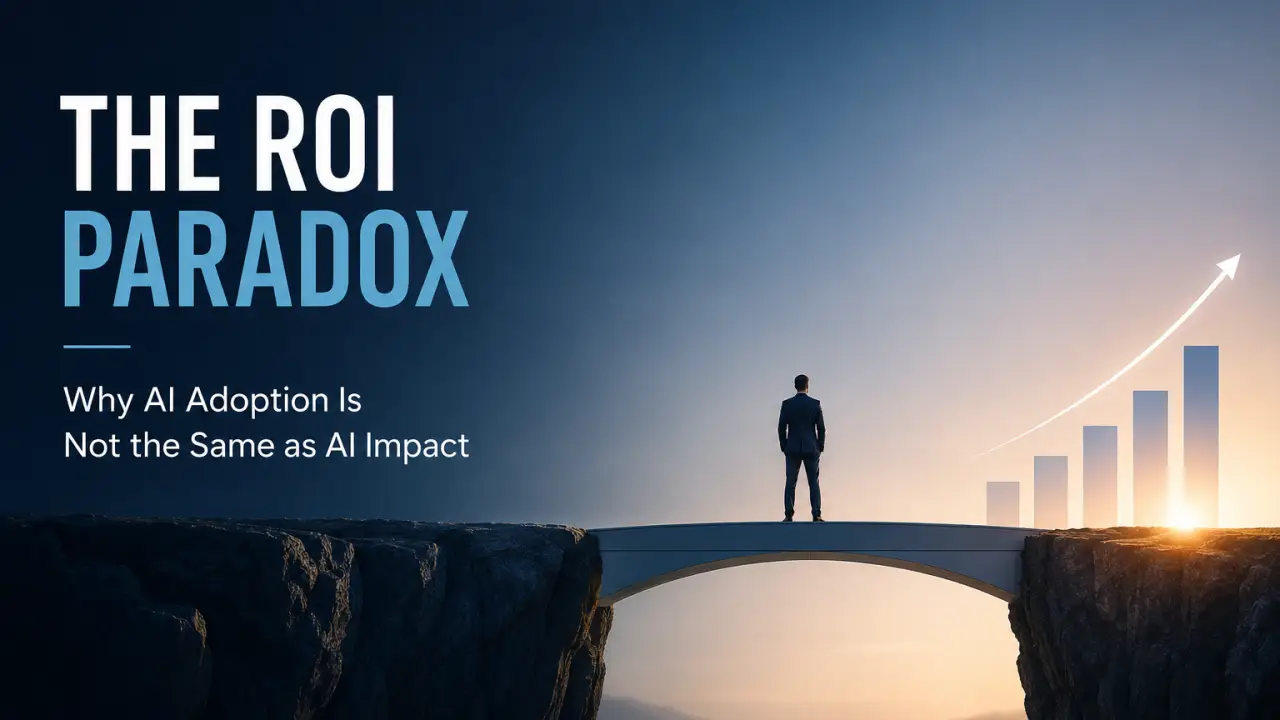

Why AI Productivity Gains Do Not Show Up in the P&L
Learn why AI adoption and time savings often fail to improve financial performance, and how leaders can redesign workflows to capture measurable AI ROI.
 Peter Blocker
Share This Post
When a company announces that AI will be available across the enterprise, the headline sounds transformational. Employees gain access to new tools. Leaders set ambitious adoption goals. Training begins. Use cases multiply.
Then the rollout reaches the actual work. That’s why you need function-specific AI guidelines.
A software engineer needs to know whether proprietary code can be shared with an AI assistant. A marketer needs rules for customer data, claims and brand voice. A finance team needs clear limits around forecasts, reconciliations and confidential information. A manufacturing supervisor needs to understand when AI-generated recommendations can inform a decision—and when a human must verify the equipment, process or safety condition directly.
One company-wide AI policy cannot answer all of those questions well.
That is why Samsung’s 2026 AI transformation plan is a more thoughtful approach than the usual enterprise pledge to go “all in” on AI. Samsung said it would apply AI across eight major business processes: development, purchasing, manufacturing, logistics, marketing, sales, service and management support. It also said it would establish operational policies tailored to different job roles and organizational characteristics.
That is exactly where enterprise AI adoption usually stumbles – because it’s overlooked or deprioritized. Company-wide principles establish the boundaries, but function-specific guidance turns those principles into daily operating behavior.
Shortly after Samsung announced its focus on AI, the company – along with OpenAI, announced one of OpenAI’s largest enterprise deployments to date. ChatGPT Enterprise and Codex were made available to all Samsung Electronics employees in Korea and to Device eXperience employees globally, spanning technical and nontechnical work in software development, product development, manufacturing, marketing and corporate functions.
Why is that move important? Once thousands of employees across many disciplines receive access to the same powerful systems, the organization must define what good use looks like in very different operating contexts.
Access can be standardized, but the work itself cannot.
The same AI platform may draft software, summarize a customer issue, analyze quality data, generate marketing copy and help prepare a financial narrative. But the inputs, risks, review standards, decision rights and business outcomes are different in each case. A successful enterprise rollout must account for those differences before employees are left to invent their own rules.
Most enterprise AI policies are written at a level that is necessary but insufficient. They address data privacy, security, approved tools, intellectual property, legal risk and responsible use. Those rules are certainly critical to the business, and they establish guardrails for AI use by employees.
What they often do not explain is how AI should be used inside a particular workflow.
A broad rule such as “verify AI output” sounds sensible, but verification means something different in every function. A marketer may check a claim against a source. An engineer may run tests and review dependencies. A finance employee may reconcile the result to approved records. A customer service manager may assess accuracy, tone and whether the response creates a contractual commitment.
Without that specificity, employees face one of two outcomes. Some move too cautiously and avoid useful applications because they are unsure what is permitted. Others move too aggressively and create risk because the organization never translated policy into the realities of their jobs.
This is not primarily a motivation problem. It instead becomes an operating-design problem.
AI does not transform a company in one uniform motion. It changes individual tasks, decisions, handoffs and responsibilities. Those changes accumulate into a new operating model. In other words, the technology is shared but the redesigned job remains unique.
For an operations team, AI may surface anomalies sooner and recommend actions. That changes who sees the information, how quickly a decision is expected and who remains accountable when the recommendation is wrong.
For a marketing team, AI may accelerate research, content development and campaign variation. That creates new questions about source quality, originality, approval, brand consistency and how much human review is required before publication.
For finance, AI may summarize performance, detect patterns or help prepare management reporting. The tool can support analysis, but the function still needs strict rules governing data access, controls, auditability and sign-off.
For software teams, AI can move beyond suggestions and begin performing sequences of work through agents. The human role may shift from writing every line to structuring requirements, reviewing architecture, testing outputs, managing exceptions and deciding what can be released.
A useful function-level guide should be short enough to use and detailed enough to influence behavior. It should not read like another legal document. It should answer the practical questions employees encounter while doing the work.
Marketing
Approved uses might include research synthesis, campaign ideation, first-draft copy and content variation. The guide should define acceptable sources, required fact-checking, treatment of customer information, ownership of generated material and the approval process for external claims. It should also specify where AI-created content must be disclosed internally and how teams protect the company’s voice from becoming generic.
Finance
Approved uses might include variance explanations, management-reporting drafts and scenario exploration using controlled data. The guide should prohibit unapproved disclosure of financial data, require reconciliation to systems of record and make clear that AI cannot approve transactions, certify statements or replace accountable financial review.
Customer service
Approved uses might include response drafting, knowledge retrieval, conversation summaries and routing. The guide should define when a human must take over, which commitments the system cannot make, how sensitive customer information is handled and how inaccurate responses are captured and corrected.
Manufacturing and operations
Approved uses might include maintenance summaries, anomaly detection, documentation support, scheduling analysis and retrieval of operating procedures. The guide should distinguish advisory output from authorized operational action and should require direct human verification for safety, quality or equipment decisions where the consequence of error is material.
The need for role-level rules becomes even more important as companies move from AI assistants to AI agents. An assistant usually responds to a request. An agent may plan work, use tools, coordinate steps and take action within a defined scope.
That means organizations need more than usage guidance. They need an agent operating model.
For every agent, leaders should define its purpose, authorized systems, permitted data, decision limits, escalation conditions, performance measures and human owner. The function must also decide who monitors the agent, who can change its instructions and who is responsible when an action affects a customer, employee, supplier or financial result.
This is why agent management cannot sit only with IT. The technical team can secure and maintain the system, but the business function understands the work, the exceptions and the consequences.
Function-specific guidance does not replace a company-wide AI policy. It completes it.
The enterprise policy should establish approved technologies, security requirements, privacy rules, prohibited uses, intellectual-property standards, legal obligations and core principles for responsible AI. Function-level guides should then translate those requirements into workflows, examples, review standards and accountability.
Think of the enterprise policy as the constitution and the function guides as the operating manuals.
The best function-specific guidance is developed with the people closest to the work. A small cross-functional group can usually create a useful first version faster than a centralized committee can produce a perfect one.
Select one important workflow in each function. Map how the work is performed today. Identify where AI is already being used or could add value. Document the data involved, the risk of error, the required human judgment and the desired outcome. Then write a short guide using real examples from that workflow.
Pilot the guide with employees, observe where uncertainty remains and revise it. Once the approach works, extend it to additional workflows.
This iterative method avoids two common failures: issuing vague guidance that changes nothing or creating an enormous policy library employees will not read.
A successful rollout should produce more than higher tool usage. Leaders should look for stronger adoption in approved workflows, fewer policy questions, lower rework, better output quality and more consistent escalation.
They should also measure whether the role is actually improving. Is the employee spending less time on repetitive work? Is more capacity reaching higher-value activity? Are decisions faster without sacrificing accountability? Are customers receiving better service? Are managers able to identify where AI is helping and where it is introducing new work?
Those are the measures that tell a company whether AI has become part of the operating model rather than another tool employees happen to have.
Organizations do need a common AI strategy. They also need common platforms, security controls and responsible-use principles. But employees experience AI through their own responsibilities, decisions and risks. Adoption becomes real when they can see exactly how the technology fits into that work.
Remember, function-specific operating rules create results.
Sources
Share This Post
Learn why AI adoption and time savings often fail to improve financial performance, and how leaders can redesign workflows to capture measurable AI ROI.
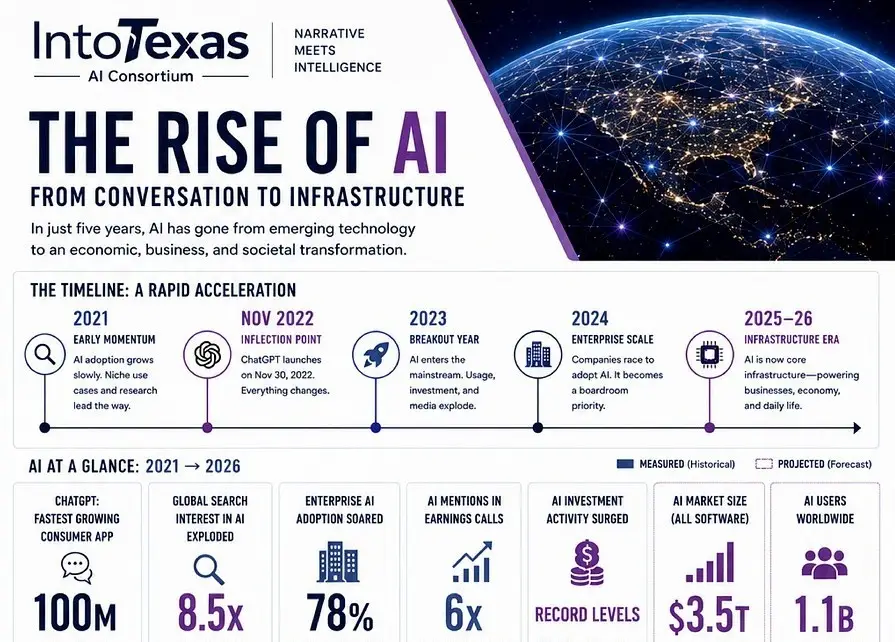

AI has moved from conversation to infrastructure. Explore the trends in adoption, investment, jobs, data centers and economic growth shaping the AI era.
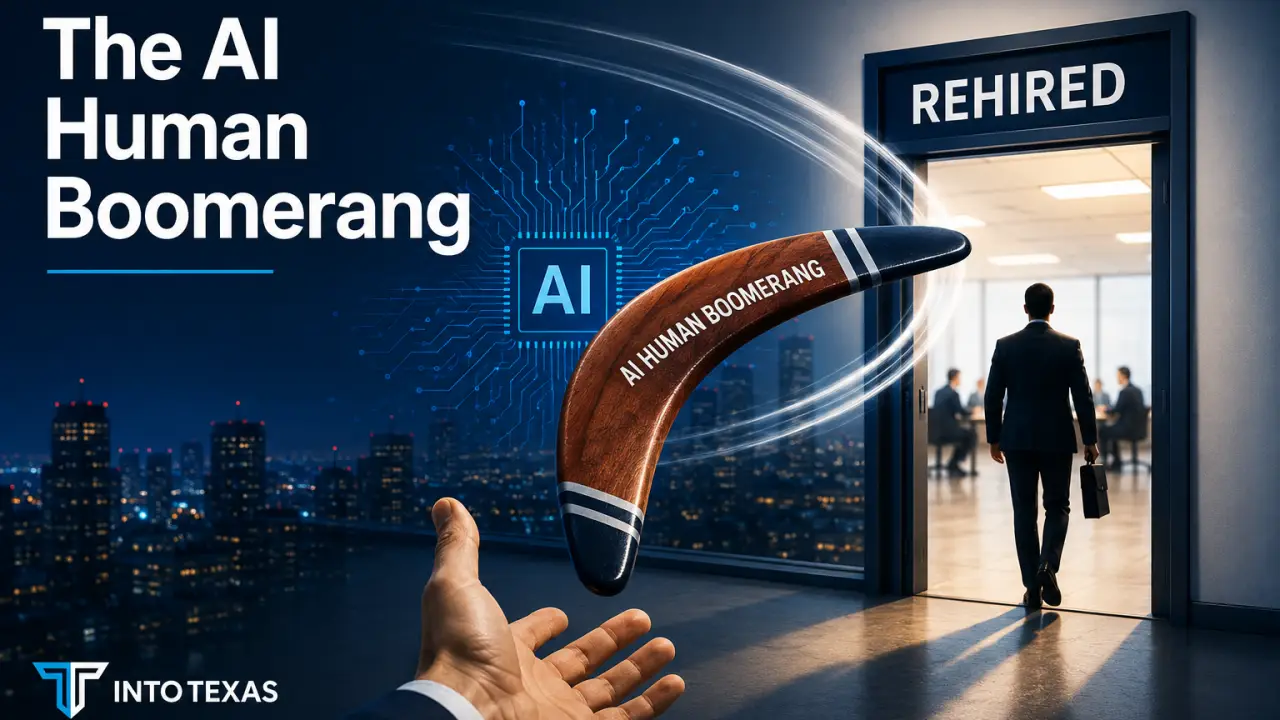
Learn how leaders can redesign work, map human and AI responsibilities, and avoid costly AI-driven layoffs followed by correction hires.
Find services, insights, articles and resources.